
10 Competitor Analysis Tools for Local SEO in 2026

Who is taking the call you wanted? A shop that looks like a rival on the street is not always the business Google, Maps, or an ad auction puts in front of a homeowner. The competitor analysis tools that help are the ones that show who you compete with in search, maps, and ads, not just who shares your trade.
Silva Marketing is a Prescott-based agency that helps local service businesses turn that insight into SEO, content, and Google Ads decisions. The work covers Prescott and nearby service areas, including Prescott Valley, Chino Valley, Dewey-Humboldt, and the wider Northern Arizona market. The usual problem is practical. An owner copies a nearby company's homepage, then still loses the job to a directory, a national brand, or a more complete-looking profile.
This list compares ten competitor analysis tools by fit, pricing cues, limits, and how a contractor or other service business should use them. It does not repeat vendor slogans. Published plan prices change, and most traffic, ranking, and ad figures are estimates rather than a view inside a rival's account.
Competitive intelligence became a formal management function in the 1980s. By the end of the 20th century, nearly all Fortune 500 companies reportedly had competitive-intelligence professionals, and a 1993 Price Waterhouse study found organizations using it well won 67% of the contracts they pursued against an 18% industry average, as discussed in Are Executives Blindsided by Competition?. A Prescott firm does not need a headquarters team. It needs a smaller stack that separates true local competitors from search competitors. SaaS roundups such as best competitor analysis tools for SaaS solve a different problem than a roofer trying to win calls in Prescott Valley.
Table of Contents
1. Semrush
Semrush is the wide suite for comparing a domain's organic search, paid search, backlinks, and content in one place. Domain Overview, Organic Research, Advertising Research, and Keyword Gap are the reports that matter when you are checking both SEO and Google Ads competitors for a local client.
A 2020 State of Competitive Intelligence survey of more than 1,000 people found that 57% of businesses had competitive-intelligence teams of at least two people, up from 37% two years earlier, and 98% rated the competitor website as a valuable data source, according to the 2020 State of CI Report. That is why a website-level tool still belongs at the center of local work. You are reading public pages, offers, and search footprint, then deciding what to change.
What to use it for
Keyword overlap: See which service terms you share with a rival and which you do not.
Paid checks: Review estimated paid keywords and ad history before you rewrite Google Ads.
Reporting: Rank tracking, backlink research, and site audits support multi-client work.
Search results list SEO Classic Pro from $117.33 per month when billed annually. The breadth can overwhelm a first user, plans have usage limits, and some features sit on higher tiers. Treat traffic and ad numbers as estimates. For a repeatable local workflow, start from a competitor analysis template so the export becomes a decision, not a spreadsheet you never open.
2. Ahrefs
When the question is which pages earn visibility and links, Ahrefs Site Explorer is the cleaner starting point. You can review estimated organic and paid traffic, top pages, ranking keywords, referring domains, and content gaps. Restricted free access exists for verified websites. Full competitor research is paid, and the cost is a real hurdle for a single-location contractor.
Backlink data is the strength. A Prescott plumber might find that a rival's "water heater" page ranks because of a handful of local citations and a clear service description, not because the whole site is stronger. Traffic and keyword figures are still estimates. Do not treat a content gap as a page you must write this week.
Practical rule: If the gap keyword would not produce a call in Prescott or a nearby town, leave it off the content plan.
Use Ahrefs to pick a short list of pages, then compare topics and service coverage with a content gap analysis. That keeps the tool tied to pages a Northern Arizona customer would read.
3. SE Ranking
SE Ranking fits small and midsize agencies that need competitor research, rank tracking, site audits, and local SEO in one subscription. Competitive Research reports organic and paid keywords, traffic-attracting pages, and sites competing for similar terms. Historical research and competitor-ranking tracking help you see whether a move lasted.
Search results list Core at $103.20 per month billed annually, plus a 14-day trial that does not require a credit card. Agency reporting helps when you watch several Prescott-area clients. Higher plans may be needed for more users, projects, or history.
A 2026 industry survey reported that two-thirds of teams used a dedicated CI platform, nearly double the roughly one-third reported in 2022, and that KPI adoption rose from 30% in 2022 to 60.5% in 2026. The lesson for a local stack is not to buy every module. It is to keep a scorecard: visibility movement, priority local queries, offer changes, and whether calls followed. A keyword gap is not automatically a worthwhile job. Data only exists for what the database captured, so confirm odd local terms in Google before you rebuild a service page.
4. SpyFu
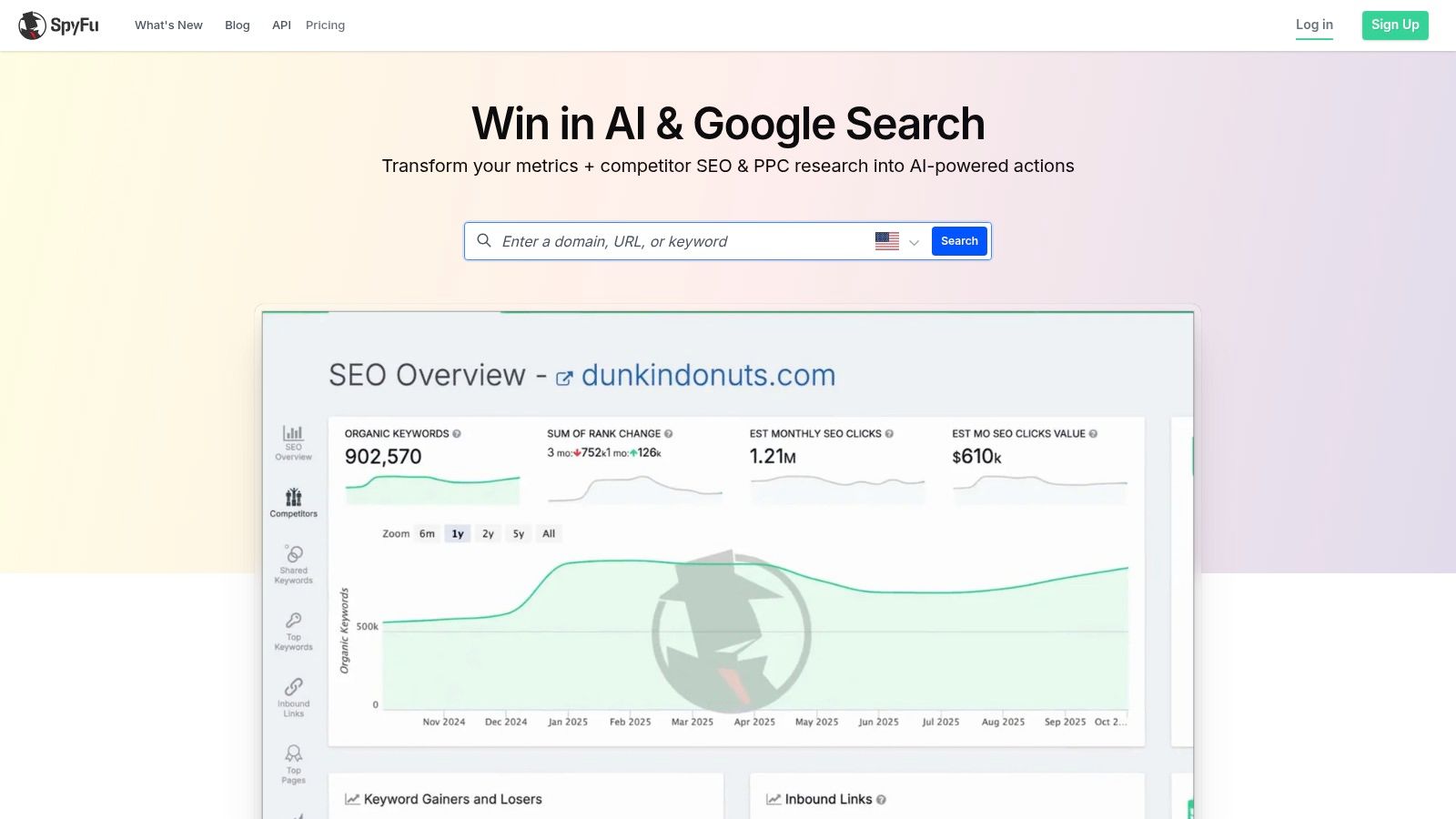
SpyFu is narrower, and that is the point. Domain and keyword reports show terms competitors rank for or advertise on, with ad-copy history and domain comparisons. It is a practical way to investigate Google Ads patterns and pick search terms to test, without opening a full marketing suite.
Search results list Basic at $16 per month billed annually. Paid plans offer a lot of searches and exports for that entry cost. API access and branded reporting sit on higher plans. Basic has smaller export and historical-data limits.
Where it misleads
Modeled ads: You are not looking at a competitor's Google Ads account, budget, or conversions.
Specialization: It will not replace a site audit or a local rank tracker.
History limits: Short history on the entry plan can hide a seasonal offer in Northern Arizona.
Use the ad history to see whether a Prescott Valley competitor keeps the same offer or rotates discounts. Then test one message. Do not copy a headline just because the tool shows it often.
5. Similarweb
Similarweb is for benchmarking websites and markets when rankings are not enough. It estimates traffic and engagement, compares acquisition channels, and can flag emerging competitors. A free, high-level look is useful before you pay. Search results list a Competitive Intelligence plan at $125 per month billed annually, with business solutions custom-priced.
The catch for local service sites is sample size. Traffic metrics are estimates and get less dependable on small sites. A Chino Valley electrician's site can look "quiet" in a market tool and still book the profitable jobs. Paid and enterprise detail can be expensive, and some views need a trial or a sales conversation.
A 2025 marketing data report said businesses were handling 230% more data than in 2020, while 65% were adopting privacy-first tracking. More charts will not tell you which rival costs you booked estimates. Use Similarweb to see channel mix for larger regional brands, then validate with your own calls, CRM notes, and location-level conversion rates. The site with the biggest estimated traffic is not always the most dangerous one.
6. Serpstat
Serpstat covers domain analysis, competitor reports, keyword research, rank tracking, backlinks, and site audits. Competitor reports find sites that share organic keywords with a target domain. That is how directories and national publishers show up next to the contractor you thought you were fighting. Search results list plans from $50 per month for Individual, and the company advertises a free trial. Selected plans also include AI visibility checks.
A 2023 survey of competitive-intelligence professionals found dedicated CI platforms in use by 67% of respondents, behind CRM systems at 85% and sales-enablement platforms at 69%, with 34% of dedicated-platform users selecting Klue. The local takeaway is workflow, not another logo. If a Serpstat finding never reaches your CRM note or your ads decision, it did not help.
Daily search, project, and export limits are real. The larger agency plan is unnecessary for one site. Label each overlapping domain as a business rival, a directory, or a publisher before you chase its keywords.
7. Google Trends
Google Trends is free, and it answers a different question. It shows relative search interest for brand names and service terms over time and by geography. It does not show exact search volume or website traffic.
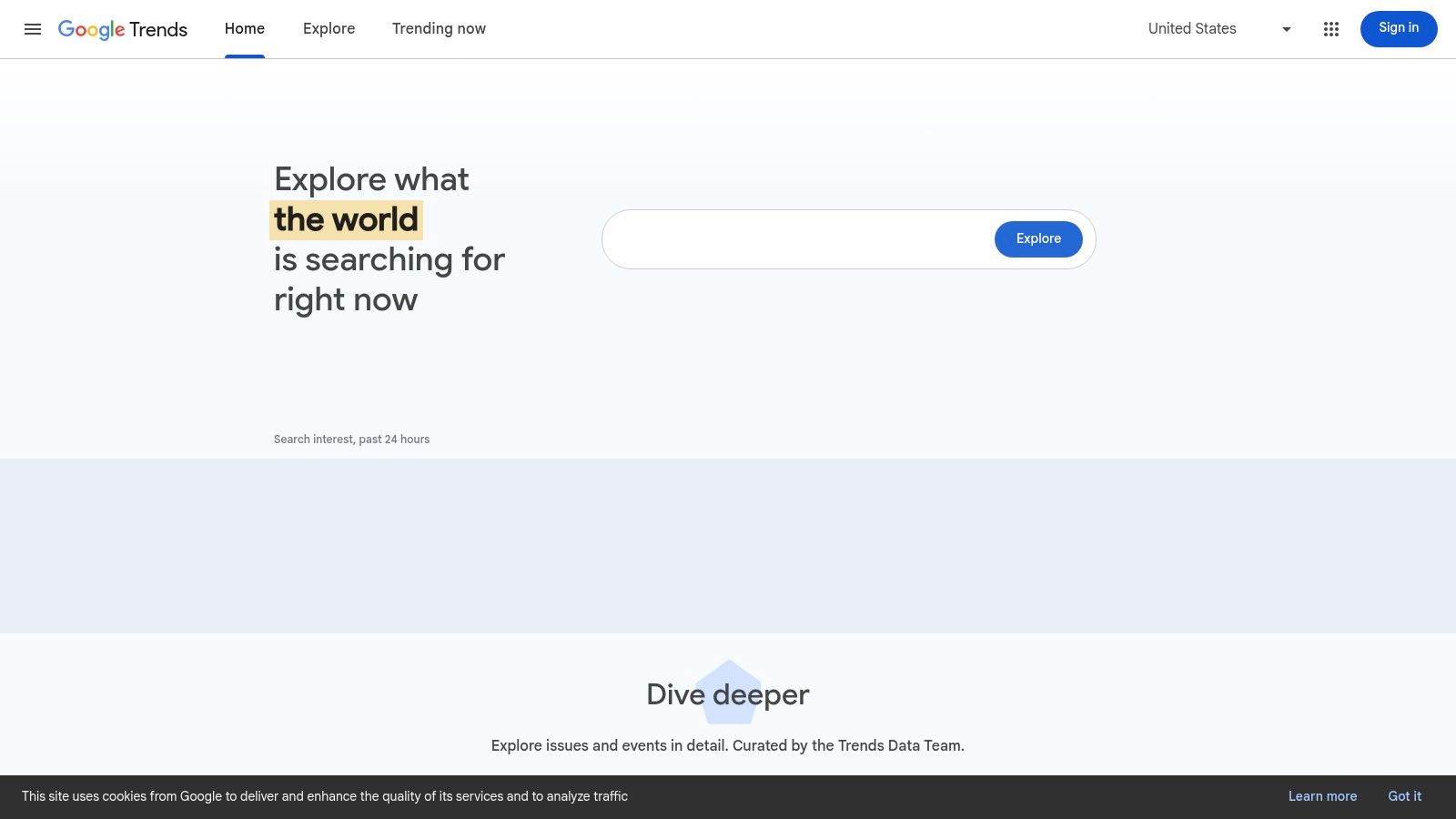
Compare your brand with one or two rivals, then compare the service category itself. If "roof repair" rises across Arizona while a competitor's name stays flat, you are looking at seasonality, not a branding win. Filters for time, category, and region, plus related and rising searches, give context you can download.
Low-volume local terms often return little or nothing. Brand names with more than one meaning mislead. "Prescott" plus a common trade name is safer than a short brand that also means something else. Use Trends to decide whether a content or ads push should follow a category wave. Do not use it to claim you outrank anyone.
8. Google Ads Transparency Center
Estimated keyword tools guess. The Google Ads Transparency Center shows ads Google has on record for a verified advertiser across Search, YouTube, and Discover. You can filter by advertiser and region and read the actual creative.
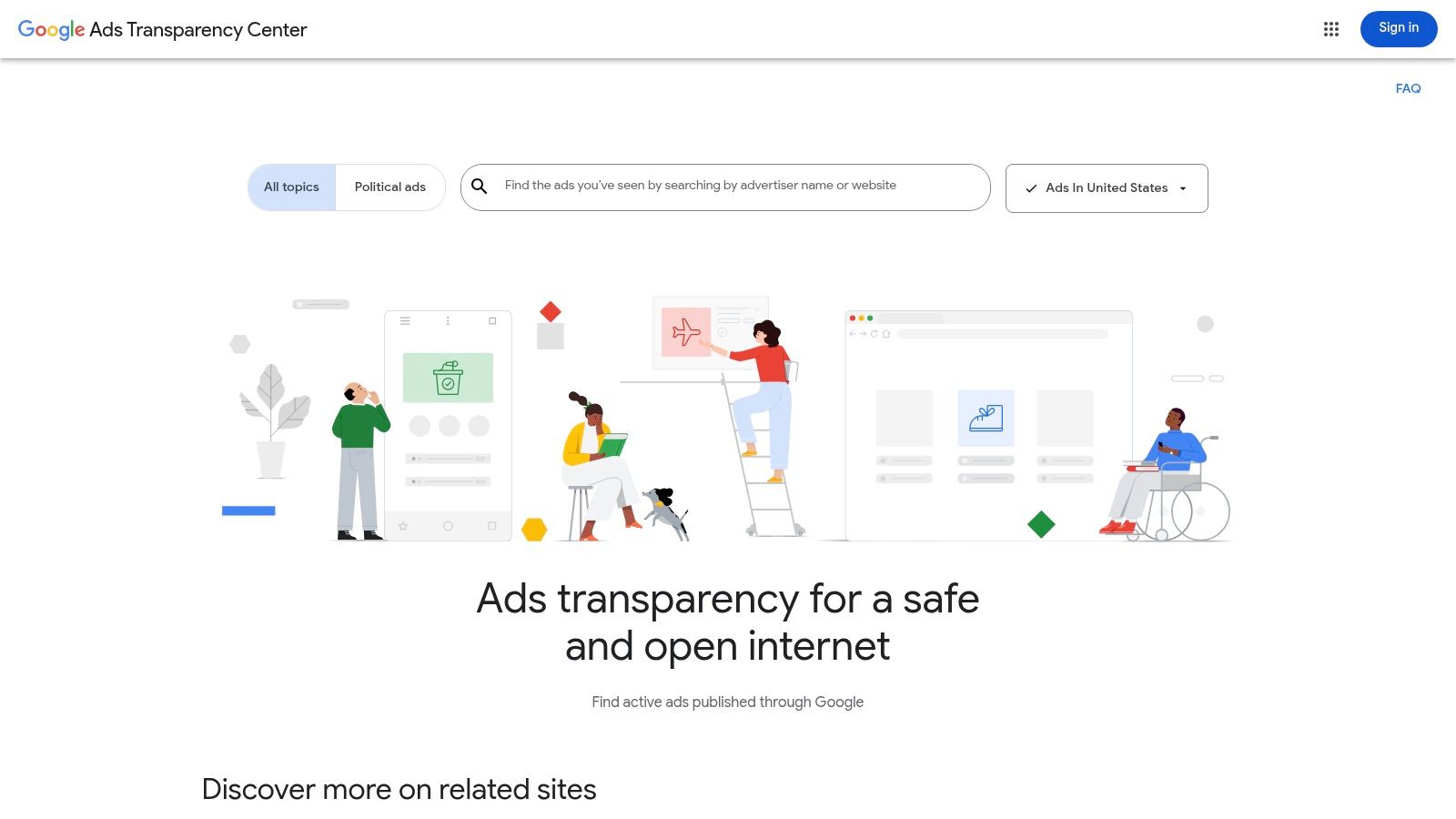
It will not tell you clicks, conversions, budget, or the full targeting setup. Search is advertiser-first, so it is a poor substitute for a keyword-to-ad workflow. Coverage depends on available records.
Read the offer, the service name, and the town. If a rival's ad names Dewey-Humboldt and yours only says "Arizona," the creative is doing local work your landing page is not.
Pair what you see with keyword research for Google Ads so you test terms that match the message, not a random list of related phrases. For Prescott service businesses, this free check is often enough to stop copying a national ad that does not fit a local job.
9. BuiltWith
BuiltWith identifies technologies on a site, including the content system, analytics, advertising tags, and ecommerce tools. Individual lookups are free. Search results list paid plans from $295 per month, which is a lot if you only need a few local sites. List research, technology reports, and exports are the paid use case.
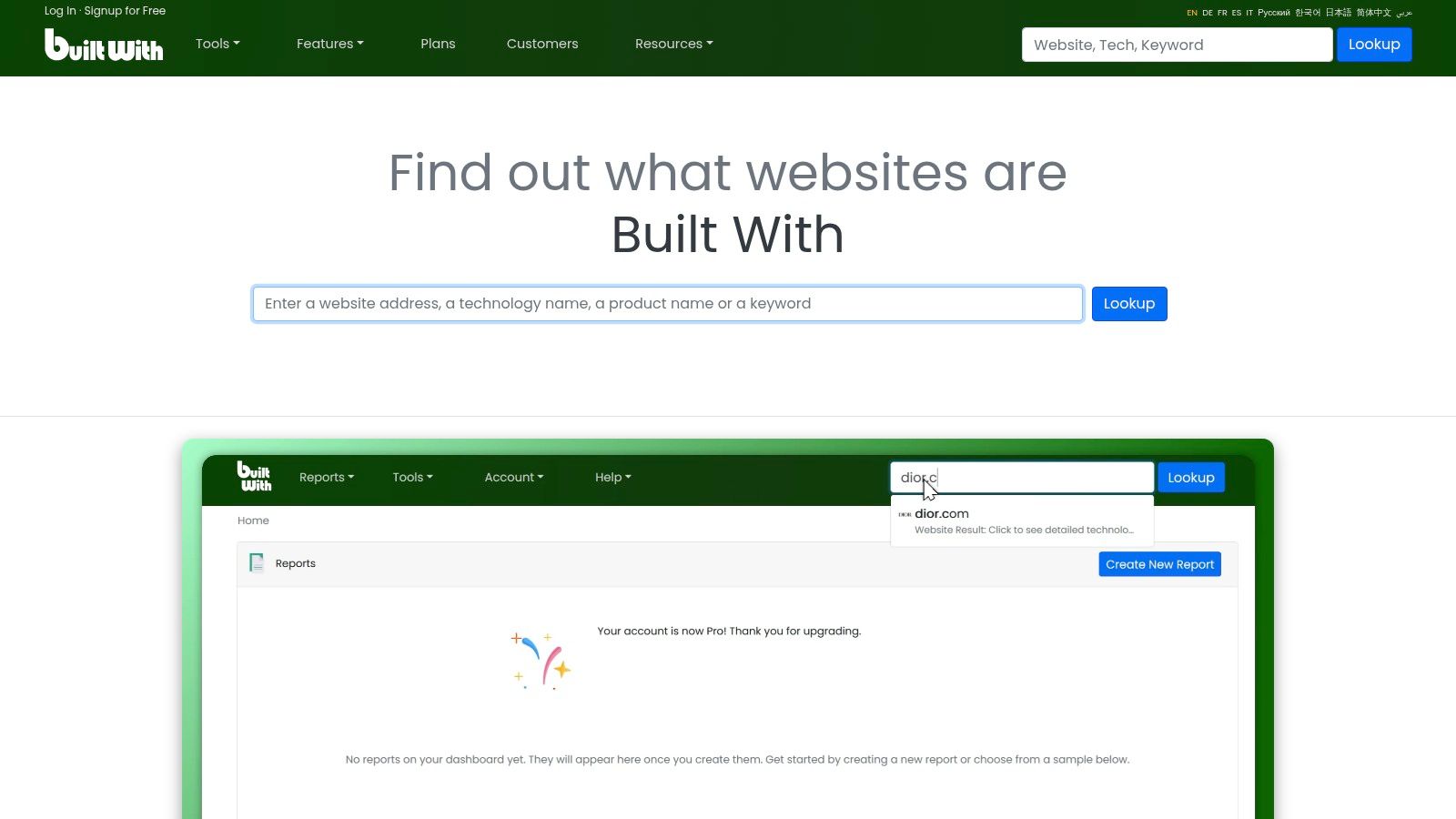
Detection can be incomplete. Verify anything you would bet a redesign on. A detected chat widget or booking tool does not mean the strategy works. It only means the script was seen.
A sane local use
One lookup: See how a stronger Prescott profile site is built before you scope a redesign.
Do not infer ROI: Tags do not show leads, close rate, or page speed in the field.
Skip the big list: Paying for industry-wide tech lists rarely helps one service area.
Use it as technical context beside SEO tools, not as proof that you should buy the same stack.
10. Google Business Profile and Google Maps manual competitor research
No paid suite replaces a search a customer would run. Google Business Profile and Google Maps, searched for a service plus a town, show who appears, which categories they use, how services are described, and what photos and reviews a searcher sees. Repeat it for Prescott, Prescott Valley, Chino Valley, and Dewey-Humboldt. Results change by location, device, and context, and you will not see a rival's calls or ranking history.
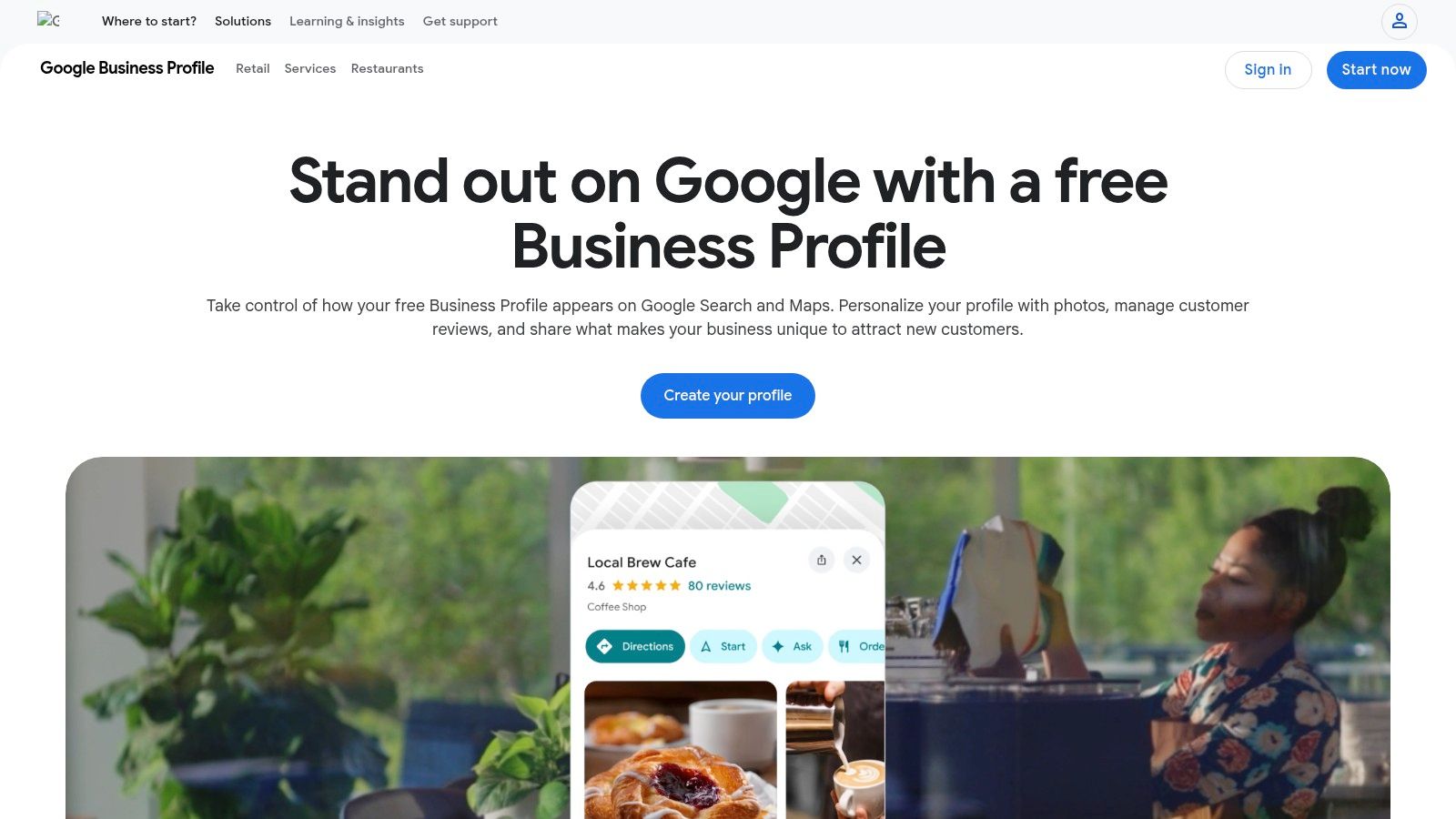
Google says local results rest on relevance, distance, and prominence, and it names links, review volume, and positive ratings as prominence signals, in its guide to local ranking. That split tells you whether you have a category problem, a distance problem, or a trust problem. How those results differ by query is easier to judge after you read how local search results are shaped.
Review practice is part of the audit, and it is also a compliance issue. The FTC's Consumer Reviews and Testimonials Rule took effect on October 21, 2024, and it allows civil penalties for knowing violations, including fake or experience-free reviews and incentives tied to a set sentiment, per the FTC's Q&A on the rule. Flag suspicious patterns. Do not copy them.
Top 10 Competitor Analysis Tools Compared
Tool | Best For / Audience | Core Competitor Insights | Local & Google Ads Fit | Value / Price | Key Caveat |
|---|---|---|---|---|---|
Semrush | 👥 Agencies and teams needing an all-in-one suite | Organic and paid keywords, keyword gaps, backlinks, site audits | ★ Strong SEO and paid-search research | 💰 From $117.33/month, billed annually | Data is estimated; broad feature set and usage limits |
Ahrefs | 👥 SEO teams focused on links and content | Backlinks, top pages, ranking keywords, content gaps | ★ Useful SEO research; includes paid-search data | 💰 Restricted free access for verified sites; paid plan for competitor research | Data is estimated; full research can be costly |
SE Ranking | 👥 Small and midsize agencies managing local clients | Competitor keywords, pages, rankings, and history | 🏆 Local rank tracking and agency reporting | 💰 Core from $103.20/month, billed annually; 14-day trial | Data coverage and plan limits vary |
SpyFu | 👥 Marketers focused on competitor SEO and PPC | Organic and paid keywords, domain comparisons, ad history | 🏆 Strong Google Ads competitor research | 💰 Basic from $16/month, billed annually | Ad and traffic figures are modeled |
Similarweb | 👥 Teams comparing markets and audience channels | Estimated traffic, engagement, channel mix, emerging competitors | ✨ Broader channel and audience view beyond SEO | 💰 Competitive Intelligence from $125/month, billed annually; free high-level insights | Estimates may be less reliable for small local sites |
Serpstat | 👥 Businesses seeking a broad, accessible SEO toolkit | Keyword overlap, gaps, backlinks, rankings, site audits | ✨ AI visibility checks on selected plans | 💰 Individual from $50/month; free trial advertised | Keyword-overlap sites may not be direct business rivals |
Google Trends | 👥 Businesses checking demand and brand interest | Relative search interest, related and rising searches | ★ Compare terms by time and geography | 💰 Free | No exact search volumes or website traffic |
Google Ads Transparency Center | 👥 Advertisers reviewing competitors' messaging | Public Google ad creatives and advertiser records | 🏆 Primary-source view of ads on Google properties | 💰 Free | No competitor budget, clicks, conversions, or full targeting |
BuiltWith | 👥 Agencies researching website technology | Detected CMS, analytics, advertising, and ecommerce tools | ✨ Adds technical context to website comparisons | 💰 Free individual lookups; paid plans from $295/month | Detection may be incomplete and does not measure effectiveness |
Google Business Profile & Maps research | 👥 Local businesses comparing nearby competitors | Profiles, categories, services, photos, and reviews | 🏆 Direct view of local search and map competitors | 💰 Free; manual research | Results vary by location and search context; no performance data |
Turn Competitor Research Into a Clearer Local Growth Plan
Pick three layers, not ten logins. Use one core SEO suite, Semrush, Ahrefs, SE Ranking, or Serpstat, for keywords, pages, and gaps. Use SpyFu or the Ads Transparency Center for paid messaging. Use Maps and Business Profiles for what a person in Prescott sees. Google Trends and BuiltWith stay optional. Similarweb earns its place when you are sizing a larger regional brand, not a five-page local site.
The goal is not to clone a competitor. It is to find gaps in services, content, reviews, and visibility across Prescott and the surrounding towns. A smaller rival with clearer service descriptions and steadier reviews can be a bigger commercial threat than a high-traffic directory.
What should trigger a budget or page change?
Lost impression share on a profitable service, a rival's new offer on a town you serve, a review gap on the platform customers use, or a map result you cannot explain. Check the idea against first-party proof: call quality, booked estimates, and location-level conversion. Third-party estimates are hypotheses.
AI answers add another gap. Many tools still stop at rankings, backlinks, and profiles. A 2025 local-search release reported that 60% of surveyed U.S. consumers clicked Google AI-generated overviews, 32% said AI-driven features such as personalized recommendations matter to them, 75% read at least four reviews before deciding, and 53% may abandon a business over inaccurate listings. Ask which competitor an AI answer recommends for your service and town, and which facts or reviews appear beside that name.
Which review signals are worth comparing?
BrightLocal's 2025 Local Consumer Review Survey found that 27% of consumers use only one website when reading reviews, up four points from the prior year, and that 29% had written a business review in the previous year. A 2025 summary of that research reported that 83% use Google to read reviews, 74% check at least two sites, and 89% expect responses to both positive and negative reviews. Only 55% would buy from a business that answers only negative reviews, and only 53% would buy from one that answers only positive reviews. Compare Google presence, one secondary platform, recency, and whether replies cover praise and complaints.
Silva Marketing can interpret that mix with you and turn it into an SEO, content, or Google Ads plan for your service area. A free consultation is enough to see whether the stack you have is pointing at the right competitors.
Silva Marketing helps Prescott and Northern Arizona service businesses turn competitor research into clearer websites, search visibility, and Google Ads that bring more calls. If you want a calm read on who you are really competing with in maps, organic results, and ads, visit Silva Marketing and ask for a free consultation.
Comments